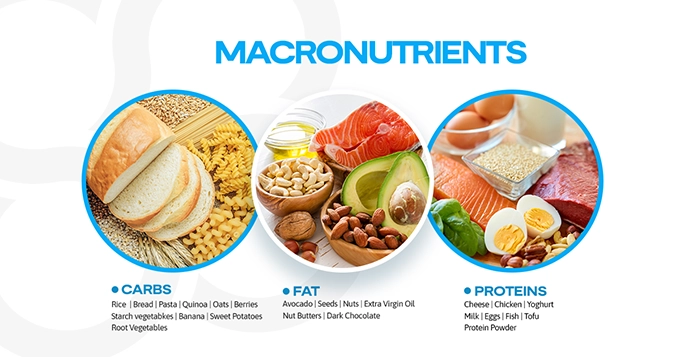
What are Macronutrients
Macronutrients, or macros, are the essential nutrients that fuel our bodies and keep them running smoothly.
All foods are made up of one or a combination of three macronutrients (or macros):
Protein, Carbohydrates, and Fat. The macronutrient content of a food determines its caloric value.
Carbohydrates and protein both have 4 calories per gram, and fat contains 9 calories per gram.
Calories don’t exist outside of these main macros (excluding alcohol, which contains 7 calories per gram).
Alcohol is technically considered a fourth macronutrient because it provides significant energy (calories per gram). Unlike normal carbohydrates, fats, and protein, alcohol is not a required nutrient for survival and provides zero essential nutrients, often referred to as “empty calories”. It is metabolized separately by the liver and can hinder fat loss.
Nutritional Value of Alcohol: None, no vitamins, minerals, or fiber, alcohol is made from Carbohydrates, as it is made from fruit (grapes or other fruits) and in the case of beer and spirits from grains, fruits and vegetables and sugar cane (all are carbohydrates).
- Body Response: The body recognises alcohol as a toxin and prioritizes breaking down alcohol, pausing the oxidation of other macronutrients (especially the breakdown of fat). To find out more about how Alcohol affects the weight loss process and its full effects on the body – click here.
The 3 Main Macronutrients (Carbohydrates, Proteins & Fats)
Carbohydrates provide the energy we need, and you can find them in foods like fruits, vegetables, whole grains, and beans. They’re like your body’s and brains preferred fuel.
While carbs are essential (our bodies and brains cannot function properly without them), they are useful as a source of energy for the body and brain. Many carb sources such as fruits and vegetables tend to be very nutrient dense (containing vitamins and minerals), and some contain dietary fiber, both of which are important for optimal health. Adequate fiber intake is important for digestion and gut health.
Examples of foods that are primarily carbohydrates include:
• Fruit and Vegetables
• Grains
• Potatoes
• Rice and Pasta
Proteins play a crucial role in building and repairing tissues, such as muscles. Meats and dairy are common sources of protein, but you can also get them from plant-based foods like beans and tofu.
Protein is found in nearly all of the tissues in our bodies, and consuming adequate protein is essential for life. Consuming the right amount for your activity level and body composition goal is vital for achieving the physique you want. Amino acids are the building blocks of protein. There are 20 different amino acids, and of these 20, your body can manufacture all but 9 of them on its own (these 9 are called essential amino acids, because it is essential to get them from your diet). Some protein sources are more complete than others, meaning they have more or all of the 9 essential amino acids that your body can’t make itself. Every protein source you eat doesn’t need to be complete, but you want to make sure the combination of proteins you are eating covers all of the amino acids your body needs for adequate muscle repair and growth.
Some examples of complete proteins are:
• Meat
• Fish
• Eggs
Some examples of foods containing incomplete proteins are:
- Vegetables
- Seeds and Nuts
- Legumes
- Grains
Fats are more than just a source of energy. They help your body absorb specific vitamins and support your cells’ structure. Healthy fats can be found in foods like avocados, nuts, and olive oil. Understanding these macros gives you a solid foundation for making informed and balanced food choices.
Unlike carbs, fats are essential—meaning the body can’t function without adequate fatty acid intake. It’s important to point out that consuming dietary fat doesn’t contribute to fat gain unless total calories are in a surplus. Adequate intake of dietary fats is important for proper hormone function, proper absorption of certain vitamins, the production of cholesterol (vital for health), and also as a source of energy for certain activities such as distance running and other low to medium intensity cardiovascular activities. There are several types of dietary fat, including trans, saturated, monounsaturated and polyunsaturated (includes omega-3 and 6). Trans fats are harmful and generally should be completely avoided. Saturated fats may have some negative health effects if consumed in excess, but they need not be completed avoided and even have benefits such as the production of testosterone. Polyunsaturated fats are essential for life and health, and monounsaturated fats have health benefits as well.
Examples of trans fats (avoid):
- Hydrogenated and partially
hydrogenated vegetable oil - Shortening
- Some margarines
Examples of saturated fats (fine in moderation):
- Coconut oil/Palm oil
- Animal fats (from meat)
- Butter
Examples of polyunsaturated fats (essential):
- Fish oil
- Nuts/Seeds
- Some plant based oils such as sunflower oil
Examples of monounsaturated fats:
- Avocado
- Grapeseed oil
- Olive oil
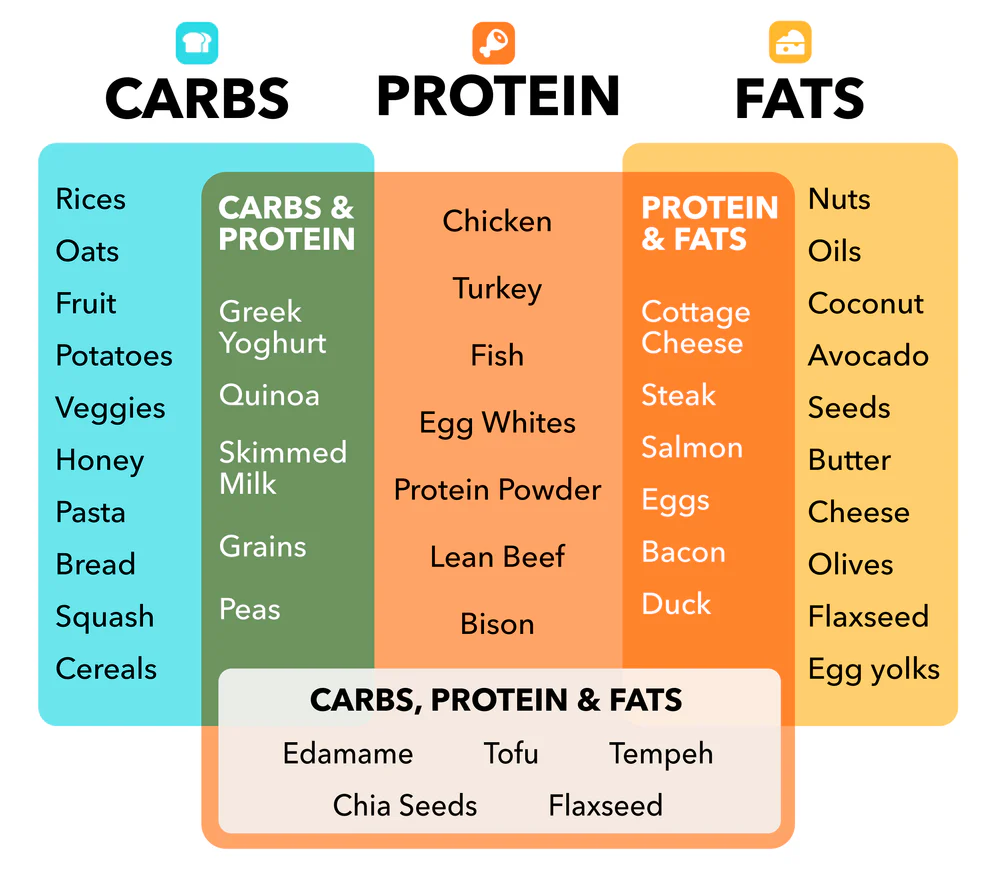
Using A Macronutrient Sheet
Use this basic macro sheet, to identify which foods are considered carbohydrates, proteins, and fats, and some are considered as Carbohydrates & Protein, while others are Protein & Fats, it is important how to learn how to fill your plate with healthy macro’s.
What Are Calories & why they Count ?
A calorie is a unit of energy. The calorie content of a food describes how much energy your body can get from consuming it. Though there are other factors involved, weight loss or gain ultimately comes down to how many calories you consume, and which Macronutients those Calories are made up of.
When you eat more calories than your body can use, and the wrong type of foods (wrong Macronutrients) the extra energy is stored as body fat, and this can also increase your risk of chronic medical conditions (eg. high Cholesterol readings (high LDL readings – (bad fat), or high Glucose readings (leading to Pre-diabetic or Diabetic diagnosis). However when you need more energy than you are getting from what you eat (in a calorie deficit), then your body burns body fat for fuel.
“Calories are typically written a kcal, Cal, or Calories (with a capital C). This is because
calories as we see them listed on food products are actually kilocalories, listed as Kilojoules (KJ) – As 1 Calorie is equivalent to 4.18 Kilojoules (KJ), and therefore 500 Kilojoules (KJ) are equivalent to 111.6 Calories.